
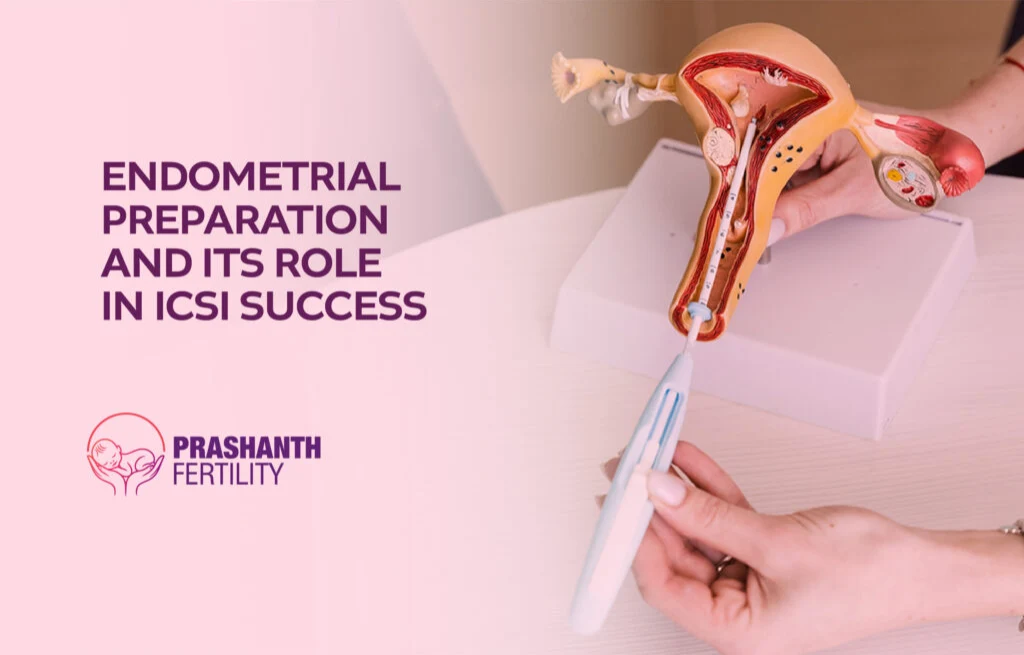
Endometrial preparation for ICSI plays a crucial role in determining whether an embryo successfully implants and develops into a healthy pregnancy. While much attention is often given to egg quality, sperm selection, and embryo grading, the condition of the uterus is equally important. Even a high quality embryo needs a well prepared endometrium to implant.
In this blog, we explain why endometrial preparation for ICSI matters, how the uterine lining supports implantation, and how doctors optimise the endometrium to improve ICSI outcomes.
Understanding the Endometrium
The endometrium is the inner lining of the uterus. Its main function is to provide a receptive surface where the embryo can attach and grow. Endometrium and ICSI success are closely linked because implantation depends on both embryo quality and uterine readiness.
During a natural cycle, the endometrium thickens under the influence of estrogen and becomes receptive after ovulation when progesterone levels rise. Endometrial preparation for ICSI aims to carefully recreate these natural hormonal changes.
Why Endometrial Preparation Matters in ICSI
In ICSI treatment, fertilisation occurs in the laboratory. However, implantation still happens inside the uterus. The role of endometrium in ICSI is to support embryo attachment, nourishment, and early placental development.
Without proper ICSI endometrial preparation, implantation may fail even if fertilisation and embryo development are successful. This is why doctors closely monitor the uterine lining during every ICSI cycle.
What is Endometrial Preparation for ICSI
Endometrial preparation for ICSI refers to the medical and hormonal steps taken to ensure the uterine lining reaches the ideal thickness, structure, and receptivity at the time of embryo transfer.
This preparation can occur in two main ways:
- Natural or stimulated cycles
- Hormone replacement cycles
Both approaches aim to optimize endometrial thickness in ICSI and align the implantation window with embryo development.
Ideal Endometrial Thickness in ICSI
Endometrial thickness in ICSI is measured using ultrasound. Most fertility specialists consider a thickness of around 7 to 12 millimetres as favourable for implantation, although pregnancies can occur outside this range.
Endometrium and ICSI success are influenced not just by thickness but also by appearance. A trilaminar or triple line pattern on ultrasound is often associated with better implantation rates.
Doctors monitor endometrial thickness in ICSI cycles regularly and adjust medications if the lining is too thin or developing too slowly.
Hormones used in Endometrial Preparation
Hormonal support is a key part of endometrial preparation for ICSI. The main hormones involved include:
Estrogen: Estrogen helps the endometrium grow and thicken. In ICSI endometrial preparation, estrogen may be given orally, as patches, or through injections. This hormone directly affects endometrial thickness in ICSI cycles.
Progesterone: Progesterone transforms the thickened endometrium into a receptive state. The role of endometrium in ICSI depends heavily on correct progesterone exposure. Progesterone prepares the lining for embryo implantation and supports early pregnancy.
The timing and dosage of progesterone are carefully planned to match embryo development.
Fresh vs Frozen Embryo Transfer
Endometrial preparation for ICSI differs slightly between fresh and frozen embryo transfer cycles.
In fresh cycles, the endometrium develops alongside ovarian stimulation. Doctors closely monitor hormone levels to ensure the lining remains receptive.
In frozen cycles, ICSI endometrial preparation is often more controlled. Estrogen and progesterone are given in a structured manner, allowing better control over timing and endometrial thickness in ICSI.
Many clinics prefer frozen embryo transfer in certain cases because it allows optimal endometrium and ICSI success without the influence of high stimulation hormones.
Factors that affect Endometrial Receptivity
Several factors can influence the role of endometrium in ICSI outcomes:
- Hormonal imbalance
- Thin endometrium
- Uterine fibroids or polyps
- Inflammation or infection
- Previous uterine surgeries
Identifying and addressing these factors is an important part of endometrial preparation for ICSI.
Thin Endometrium and ICSI
Thin endometrium is a common concern in fertility treatment. Endometrial thickness in ICSI cycles that remains below optimal levels may reduce implantation chances.
Doctors may modify estrogen dosage, extend the preparation phase, or explore additional treatments to improve blood flow and endometrial growth. Endometrium and ICSI success improve when the lining is given adequate time and support to develop.
Monitoring during Endometrial Preparation
Endometrial preparation for ICSI involves regular ultrasound scans and sometimes blood tests. These help assess thickness, structure, and hormonal response.
Monitoring allows timely adjustments, ensuring the endometrium reaches the most receptive stage at the time of embryo transfer. Careful monitoring is one of the strongest contributors to improved ICSI endometrial preparation outcomes.
Lifestyle Factors and Endometrial Health
While medical treatment is primary, lifestyle factors also support endometrial preparation for ICSI. Adequate hydration, balanced nutrition, stress management, and avoiding smoking can positively influence uterine blood flow.
Although lifestyle changes alone cannot replace medical treatment, they support the role of endometrium in ICSI success when combined with proper hormonal care.
Common Concerns Women Have
Many women worry that endometrial issues mean ICSI will not work. In reality, modern fertility treatments offer many ways to optimise endometrial preparation for ICSI.
With careful planning, most women achieve adequate endometrial thickness in ICSI cycles. Open communication with the fertility team helps address concerns early.
Final Thoughts
Endometrial preparation for ICSI is a vital component of successful fertility treatment. While embryos often receive the spotlight, the uterus plays an equally important role in implantation and pregnancy development.
Understanding the role of endometrium in ICSI helps women feel more informed and confident during treatment. With proper monitoring, hormone support, and personalised care, endometrium and ICSI success can be effectively optimised.